
NEW MODES SPRINT
Overview
CONTEXT
Even though most Starbucks stores had reopened for grab & go, drive-thru, and curbside service by July 2020, customer traffic remained significantly reduced during the pandemic and we understood that "business as usual" would not return any time soon. In addition to a need to drive business, Starbucks intuited that customers were longing for connection and community; for the Third Place experience they used to find in our stores.
PROJECT DURATION & TIMELINE
In order to meet customer needs during the pandemic, this sprint had an accelerated pace with a goal to complete 2 rounds of customer empathy research and develop a new mobile pop up store format that would be ready to launch within 6 months.
KEY PLAYERS
-
Design Strategists: Lauren Egge, Ben Grossman Kahn & Andrew Ohm
-
Business Owners: Elicia Williams & Casey Castello
-
UX Designer: Sarah Coburn
RESPONSIBILITIES
Remote ideation session and workshop design, user interviews, usability testing, paper prototypes, wireframes, visual design, interactive prototypes.
Research
SECONDARY RESEARCH
To supplement user research and kick off an ideation session, the team utilized existing Starbucks research that was conducted during the pandemic. It was understood that there were macro trends of disconnection, loneliness, and isolation felt by our customers. While there was a desire to maintain health-related safety, there was also a tension and need for community, new routines, and a new Third Place.
Learning goals

How might we...
Ensure that Starbucks sparks enough joy to earn a place in customers' routines?

HOW MIGHT WE...
Bring excitement to customers' lives by bringing a touch of novelty?

HOW MIGHT WE...
Seamlessly fit into customers' lives no matter what mode they're in?
Ideation
GENERATING 500+ NOVEL IDEAS
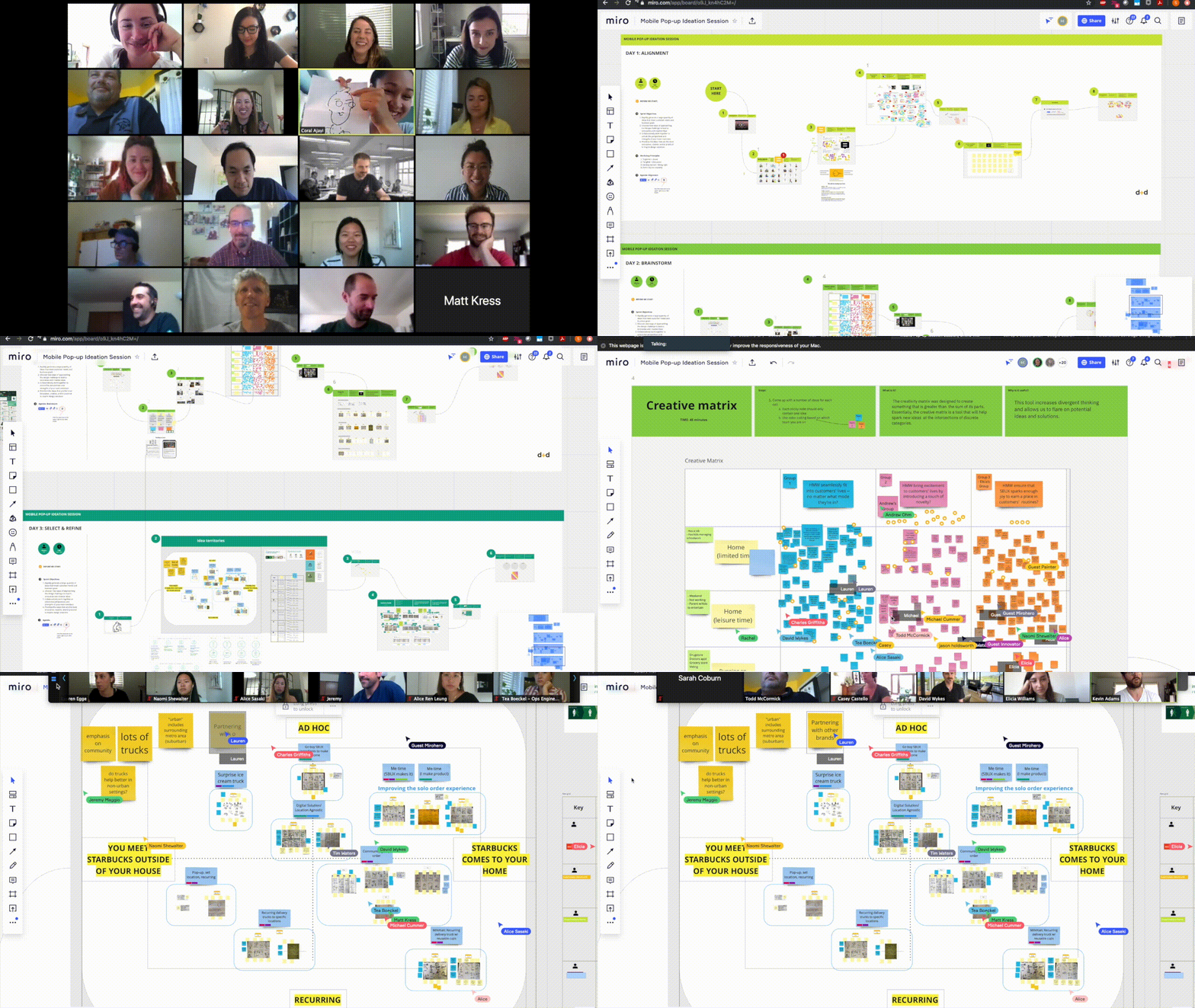
With the help of Ben Grossman-Kahn and Lauren Egge, I designed this remote ideation session Miro board to lead 20+ participants through a series of idea-generating activities. Using our learning goals as frameworks, the larger sprint team brainstormed over 500 novel ideas for how we might solve customer needs. As a final step, we prioritized and refined the ideas down to 3 concept areas to explore with customers
Empathy prototypes
ROUND ONE
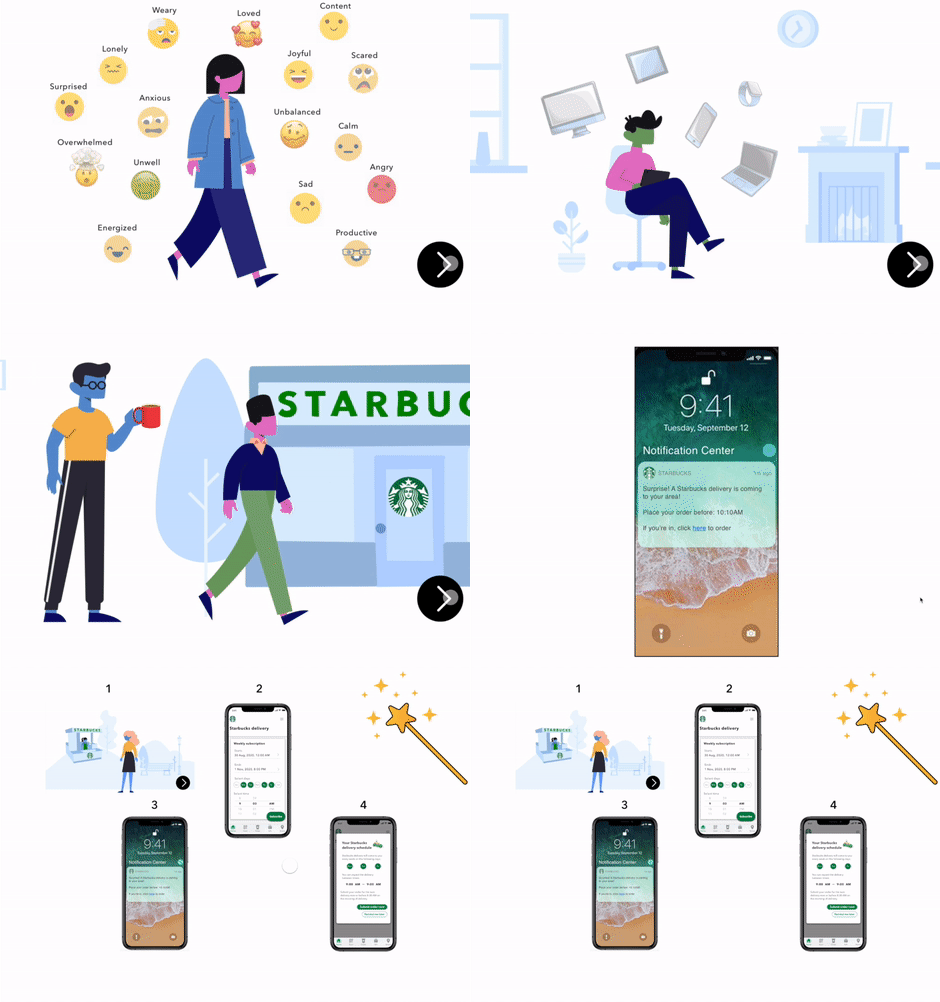
Sometimes it's more efficient to build to learn. I created empathy prototypes to provoke questions, reactions and and test our most risky assumptions with customers in 19 one-on-one interviews. Our learning goals included:
- What is the new shape of "convenience" when customers aren't leaving the house as often?
-
How can Starbucks intentionally create something new/different to stay relevant and engage customers during the pandemic, but in a way that also endures after the pandemic has passed?
-
Are there opportunities to amplify what customers love about their new routines?
-
How might we ensure that Starbucks sparks enough joy to earn a place in customers’ new routines?
-
Explicitly capture why customers aren’t returning to current stores.
ROUND TWO
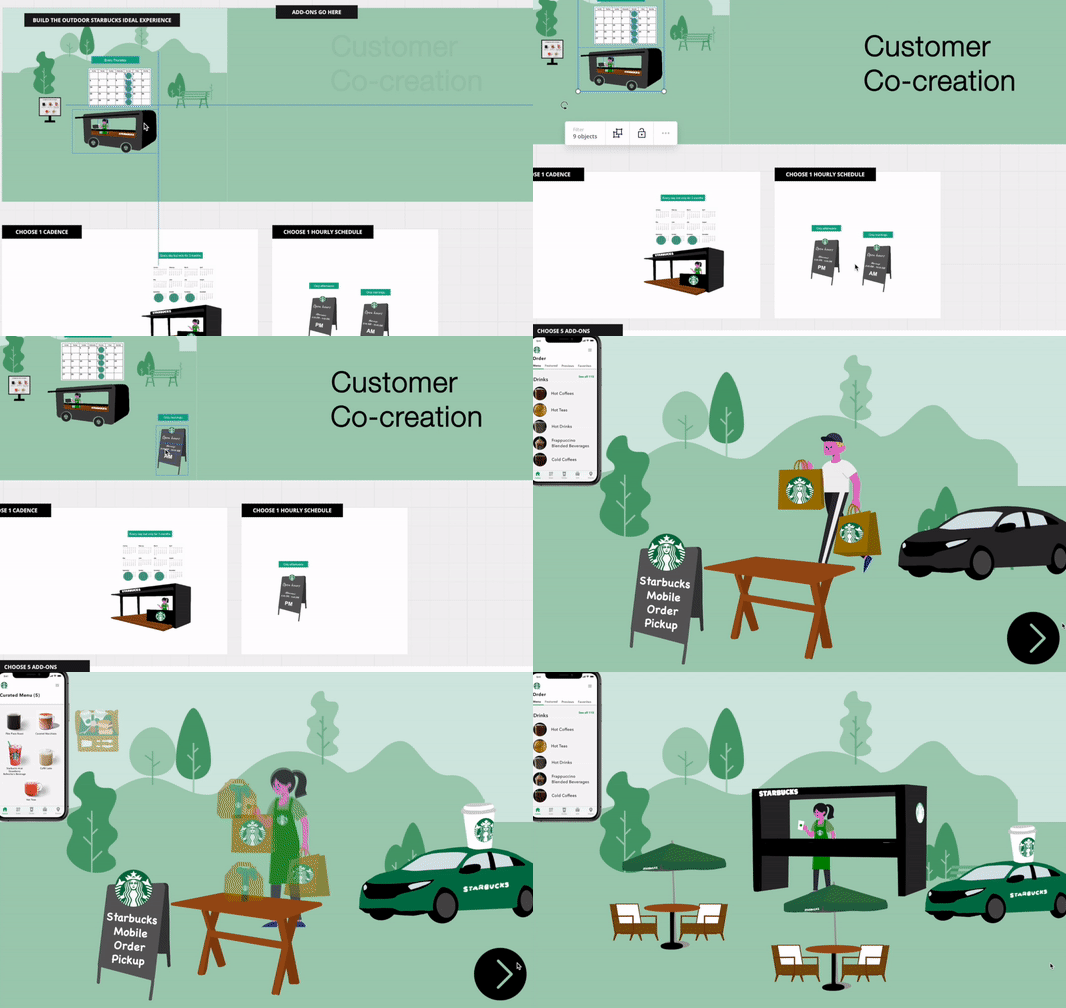
After rapid synthesis, we refined our learning goals and I created a new set of prototypes to test with customers in the following week. For this round, our learning goals were less exploratory and more focused on concept-testing and customer co-creation.
Customer feedback


Test
TESTING OUR RISKIEST ASSUMPTIONS WITH AN MVP EXPERIENCE
In order to test our riskiest assumptions as quickly as possible, and to measure customer desirability as well as concept feasibility, we brought an MVP experience to life with the "Starbucks Coffee Outpost" in a park. Even though we kept the test experience as simple as possible, it required a tremendous amount of planning, research, and coordination over several weeks. Running a real world test pushed our team to grapple with questions that are not immediately obvious on a powerpoint slide. This experiment helped our team learn quickly about the realities of gaining park permits during a pandemic, and how customers would respond to finding us in their local park.
We launched a 2-day Coffee Outpost test at Marina Beach Parkin Edmonds, Washington and offered customers two different experiences.
-
They could order brewed coffee or tea, which was available at the Outpost
-
They could order from the full Starbucks menu and an Outpost Partner would bring their order to them from a nearby Starbucks.

QR code experience
A SOCIALLY-DISTANCED WAY TO VIEW OUR MENU
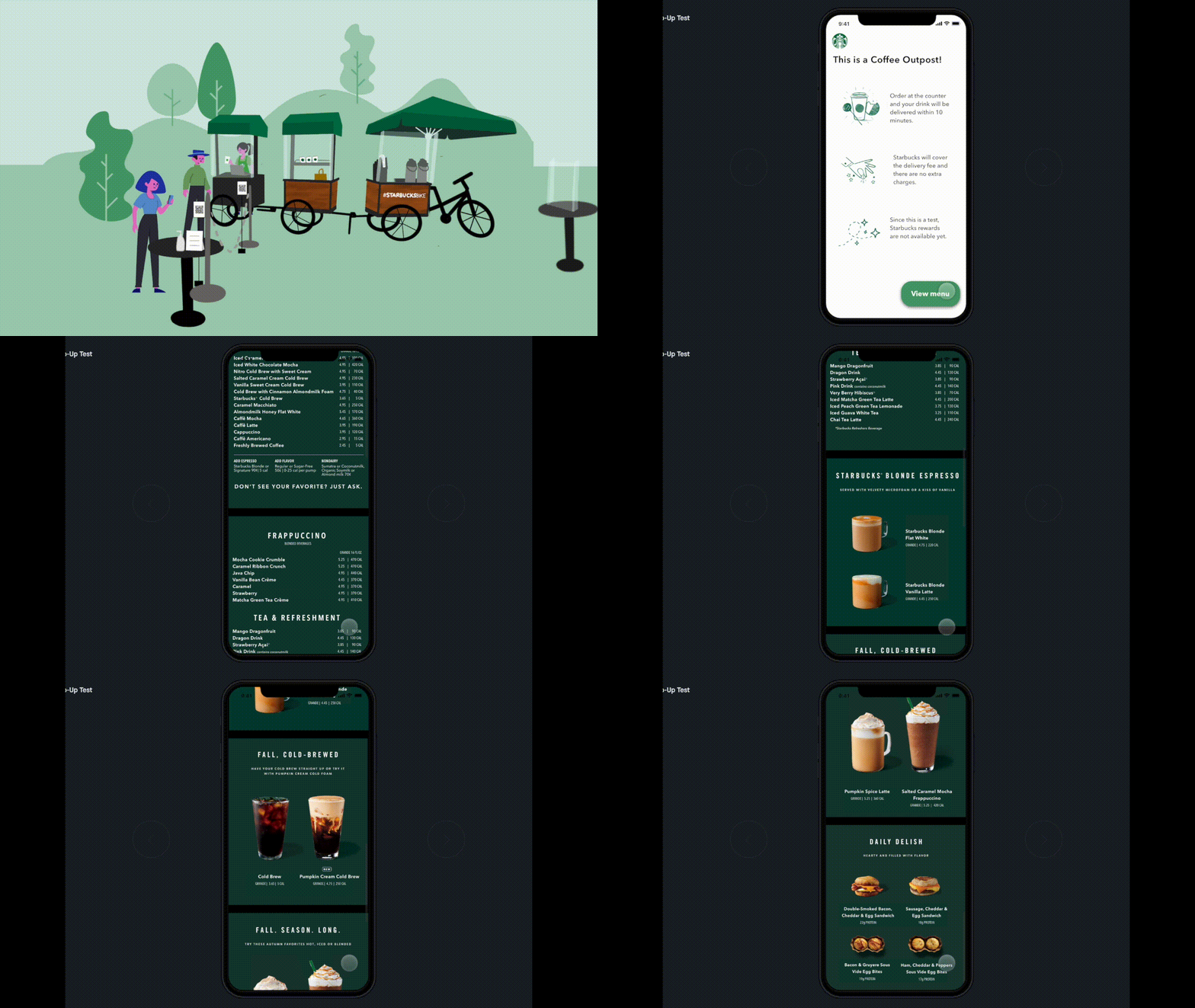
To avoid any gathering of people around during the pandemic, I created a QR code experience so customers could safely view our in-cafe menu.
Result
SURPRISE & DELIGHT
During height of the pandemic, customers were delighted by the sight the Starbucks Coffee Outpost in their local park. The Coffee Outpost added convenience, meeting customers where they are at the park, and provided a moment of comfort and community. One customer reported "I love it! I don’t usually go to coffee places as a destination but because you’re somewhere on my way somewhere I stopped!" while another customer said "I think things like this add to community because just being here, I'm hearing people laughing and hearing people talking and it just makes me happy." One surprising learning is that between waiting 5-10 minutes for the delivery of any Starbucks menu item, or having a brewed coffee right now, the majority of customers chose brewed coffee even though it wasn't their typical Starbucks order.
Retrospective
POSITIVE LESSONS AND OPPORTUNITIES FOR IMPROVEMENT
Throughout this sprint, I learned several positive lessons about moving with speed, and also noted where there are areas from improvement. In our goal to move quickly, our team successfully covered what typically takes 2 months in only 4 weeks. This accelerated pace translated into planning and building assets the day before, and even changing directions the morning of! During this time, I learned the importance of taking a bias towards action, moving forward with risks, and having strong communication skills more than ever.
I also noted where there are areas of improvement. I designed a QR code experience for this test as a solution that allowed customers to safely view the menu on their mobile devices, instead of crowding around a sign. However, the demographic of customers at our specific test location skewed older and consisted mostly of retirees. Many of these customers preferred to view physical menus instead of scanning a QR code. We adapted quickly and were able to provide physical menu signage, but going forward I learned the importance of conducting more thorough research on the the chosen testing location prior to the test.